
Best Time to Visit Norway for Every Type of Trip
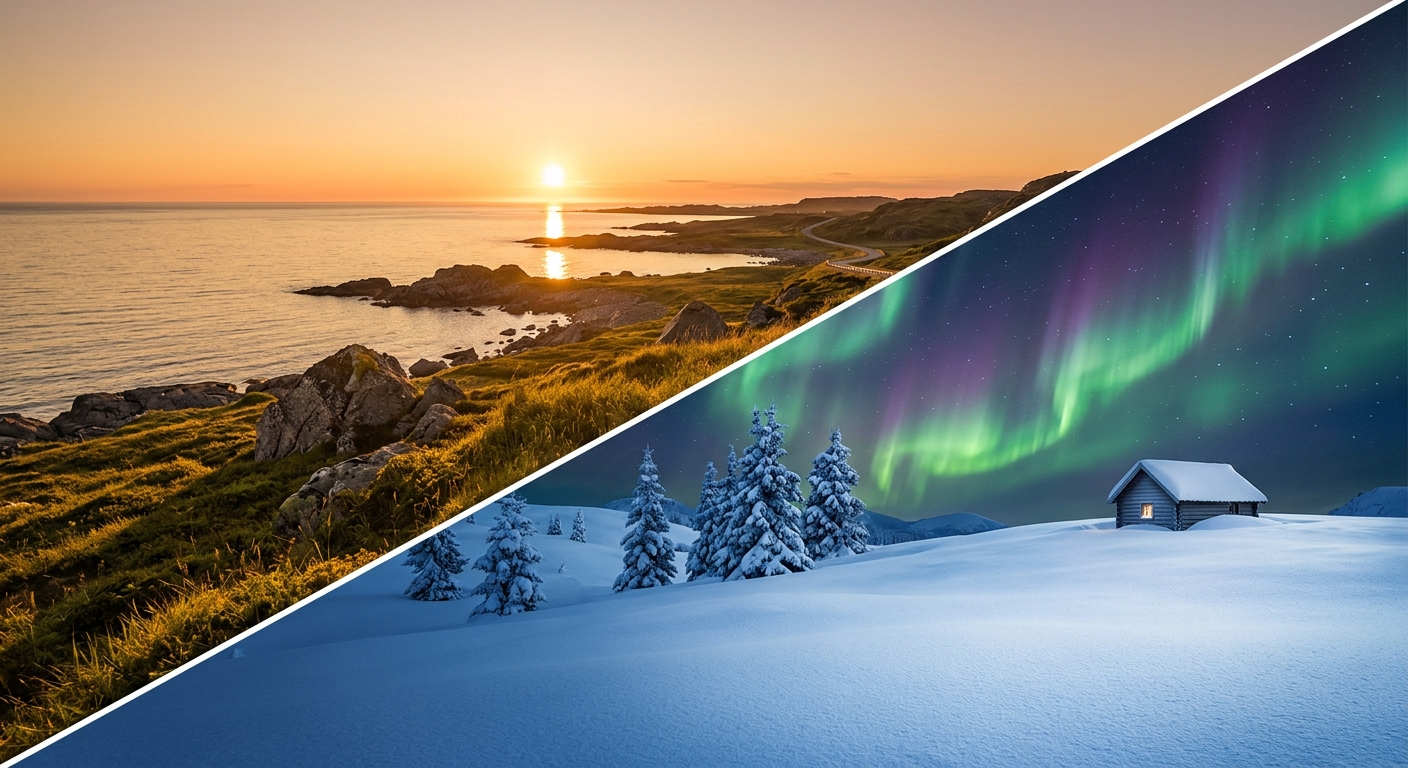
- June to September is peak season for outdoor activities and midnight sun. July and August have the most daylight but the highest prices.
- December to March is aurora season and winter activities. February and March offer the best balance of aurora probability and milder temperatures.
- May and September are the strongest shoulder months — most activities running, prices lower, crowds thinner.
- Via ferrata and glacier routes typically open in June and close by mid-September; confirming exact dates with your operator matters.
- No single month is universally "best" — the question is best for what.
Summer (June – August): midnight sun and peak access
June through August is when Norway is most accessible. Glacier routes are open, via ferrata is running, white-water rafting is in season, and in the far north the sun does not set at all. July is the most visited month, which means the most competition for accommodation and guide slots — booking 6–8 weeks out is not overcautious in July and August, it is necessary.
The midnight sun is both a genuine experience and a logistical factor. A hiking day that starts at 10 AM and runs until 8 PM is still fully lit. The flip side is that June and July are when Norway is at its most expensive.
Shoulder season (May and September)
May and September offer most of what summer does at lower prices and thinner crowds. In May, mountain routes are still opening and some higher-altitude via ferrata routes may not be accessible until June; in September, most activities are still running but several via ferrata routes close mid-month as conditions turn.
September is particularly strong for value: summer guide capacity is still largely available, the colours in the valleys and fjords shift to autumn tones, and the aurora starts to become visible again in the north — the first sightings of the season typically appear in late September.
Winter (late November – March): aurora and snow activities
Winter is a distinct trip type, not a budget version of summer. The aurora is only visible in a dark sky — which means this is the season for it. Dog sledding, reindeer sledding, snowshoeing, and ice fishing are winter-only activities that simply do not exist in summer.
February and March offer the best balance: aurora probability stays high, but temperatures are slightly milder and daylight is returning. December and January have the deepest winter atmosphere but also the shortest days and the coldest temperatures in the far north.
Month-by-month summary
A quick reference for planning around season and activity type:
- Guide slots for glacier hiking and via ferrata — these are the actual bottleneck in peak season, not flights or hotels
- Accommodation in Hardanger and Lofoten — both book out far in advance in July and August
- Aurora tours from Tromsø — departure times and group sizes are fixed once sold
- Shoulder season (May, September) closes most of the cost gap with peak season for everything except some guided activity availability
- Winter trips require a completely different packing list — standing still at -15°C demands different gear than hiking
- The aurora is not guaranteed in any season — plan for the experience of the landscape and the activities, not solely the lights